Key Facts
- Germany and the Ivory Coast are tied at three points in Group E; Germany’s significant goal differential is putting pressure on Faé’s team.
- Germany has won five straight games across all competitions; Havertz’s two-goal performance and Brown’s debut goal highlight the team’s balanced offensive threat.
- Ivory Coast remained disciplined in their 1-0 win over Ecuador; Amad Diallo’s late goal demonstrated the value of fresh offensive substitutions.
- Evan Ndicka’s questionable thigh injury is a major concern, as Germany can put pressure on the defense with speed and multiple scoring threats.
- The two teams have met once before: a 2-2 draw in a friendly in November 2009; in competitive play, this World Cup match is their first direct clash.
- The bet on over 3.5 goals is supported by the fact that Germany’s last five games have averaged five total goals, and Pépé poses a threat on the counterattack.
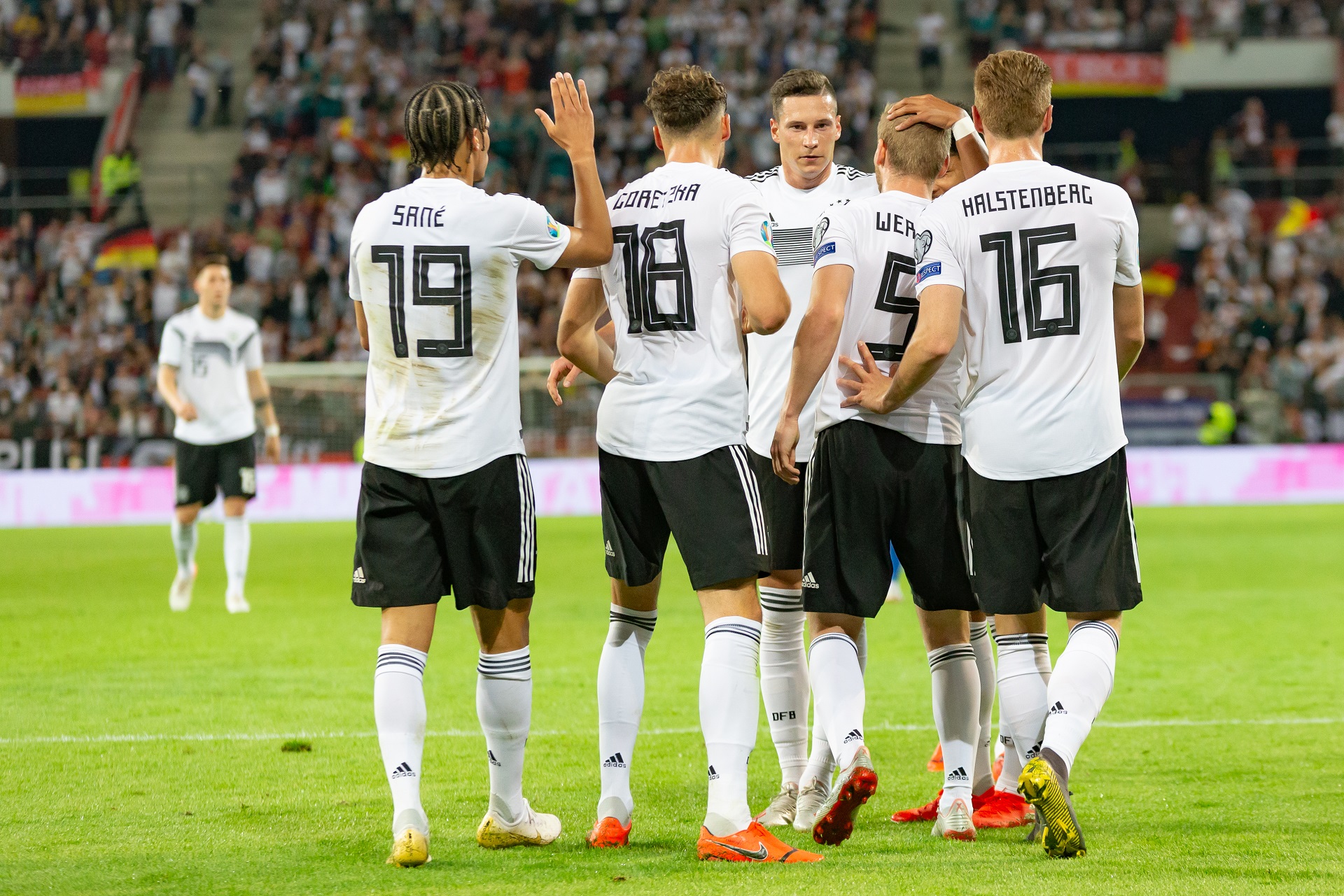
Germany arrives at BMO Field with the loudest message from Group E: Julian Nagelsmann’s team kicked things off with a 7–1 win over Curaçao, while the Ivory Coast later responded with a controlled 1–0 victory over Ecuador. Both teams have three points, but Germany’s goal differential puts Emerse Faé’s team under early pressure not only to keep up but to actively build on their lead.
- Venue: BMO Field, Toronto
- Date and Time: June 20, 2026, 10:00 p.m.
- Competition: World Cup (Group Stage – 2)
The betting market sees Germany as the clear home favorite, which supports the “Germany to Win” pick. More interesting, however, is a look at the goal markets: Kai Havertz’s early goal, the assists from Florian Wirtz and Joshua Kimmich, and Germany’s open style of play all point to Over 3.5 Goals and Both Teams to Score: Yes. Evan Ndicka’s questionable availability due to hamstring issues increases the risk for Ivory Coast, while Yan Diomande and Nicolas Pépé pose a threat on the counterattack.
Germany Form & Record Check
Germany’s 7-1 victory over Curaçao delivered exactly what one would expect from an opener against a debutant, but the manner in which it was achieved was nonetheless telling. Felix Nmecha scored early, Kai Havertz netted twice, and Nathaniel Brown made a strong statement in his World Cup debut with a goal and an assist. The only minor cause for concern was that Germany looked briefly vulnerable after conceding a goal. Across all competitions, Nagelsmann’s team has won five straight games, with their most recent World Cup warm-up results being a 1–2 loss to the U.S., a 4–0 win over Finland, a 2–1 win over Ghana, and a 3–4 loss to Switzerland.
What stands out is the broad distribution of scoring in the offense, as goals come from midfield, defense, and the bench—not just from a central striker. It is precisely this diversity that makes defensive preparation a challenge for opponents.
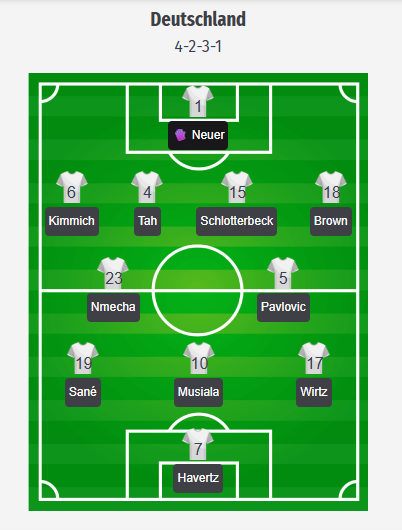
Germany’s projected starting lineup is expected to be a 4-2-3-1, with Manuel Neuer, No. 1, in goal behind Joshua Kimmich, No. 6, Jonathan Tah, No. 4, Nico Schlotterbeck, No. 15, and Nathaniel Brown, No. 18. With no injuries or suspensions reported, Felix Nmecha, No. 23, and Aleksandar Pavlovic, No. 5, form the backbone of the midfield, while Kai Havertz, No. 7, leads the attack.
Ivory Coast Form & Record Check
Ivory Coast’s 1-0 victory over Ecuador was less spectacular than Germany’s opener, but perhaps more revealing. Emerse Faé’s team controlled the game with discipline and, after substitutions that injected fresh legs into the offense, found the decisive moment late in the game through Amad Diallo. However, the yellow cards for Seko Fofana, Franck Kessié, and Guéla Doué also show that more precise control will be needed against Germany’s pace. Their overall form across all competitions is strong, with wins against Philadelphia Union II, France, Scotland, and South Korea prior to the Ecuador result. The results—0–2, 1–2, 0–1, and 0–4—speak to a team that feels comfortable on the road and remains compact without becoming passive. Evan Ndicka’s questionable thigh injury is a major concern, especially when Germany puts sustained pressure on the back line.
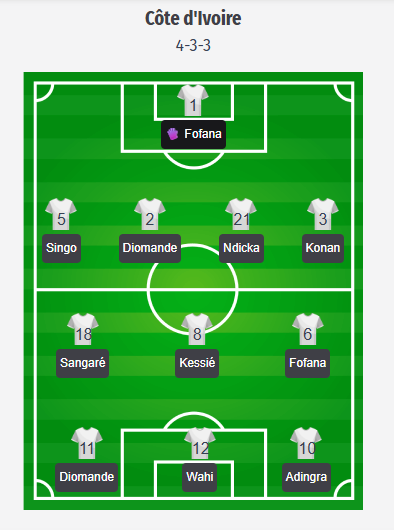
Emerse Faé could stick with the 4-3-3 formation, with Yahia Fofana, No. 1, expected to start in goal. Should Evan Ndicka, No. 21, be sidelined due to the aforementioned thigh issue, Emmanuel Agbadou, No. 20, is expected to replace him alongside Ousmane Diomande, No. 2. The midfield trio is likely to consist of Ibrahim Sangaré, No. 18, Franck Kessié, No. 8, and Seko Fofana, No. 6, while Yan Diomande, No. 11, and Simon Adingra, No. 10, will play central roles in the attack.
Germany vs. Ivory Coast Head-to-Head & Statistics
Germany and the Ivory Coast have faced each other once before: a 2–2 draw in a friendly match on November 18, 2009, at the Veltins-Arena in Gelsenkirchen. Lukas Podolski scored both German goals, first on a penalty kick in the 11th minute and then in stoppage time to equalize from open play; Eboué and Doumbia scored for the Ivory Coast. The two teams have never met in competitive play: this World Cup group stage match is their first direct competitive encounter. As a result, the current form matters more than past history: Germany’s faster scoring pace against Curaçao, the Ivory Coast’s controlled victory over Ecuador, and the fact that both teams have three points in Group E shape the outlook.