Key Facts
- All teams in Group B currently have one point, so a win for either Canada or Qatar would provide important early momentum.
- Canada didn’t look sharp until after substitutions were made in their 1-1 draw against Bosnia and Herzegovina; Cyle Larin scored the equalizer off an assist from Promise David.
- Qatar secured a late 1-1 draw against Switzerland and viewed the point as visible progress following their pointless 2022 World Cup campaign.
- Alphonso Davies remains Canada’s biggest personnel question mark following his thigh injury, while Jonathan David and Cyle Larin form the expected attacking duo.
- Canada’s 0–2 victory over Qatar in 2022 was decided early on, but serves only as a limited indication of a controlled opening phase.
- Despite Canada’s status as favorites, four draws in five games, Qatar’s slow starts, and low-scoring matches point toward a draw at halftime or under 1.5 first-half goals.
Canada arrives at BC Place with the momentum of a home World Cup, but also with the intensity sparked by the 1-1 draw against Bosnia and Herzegovina within its own camp. Stephen Eustaquio described that match as a defining moment, while Qatar—bolstered by Karim Boudiaf’s publicly displayed confidence following their own 1-1 draw against Switzerland—sees Thursday night as an opportunity to capitalize on the team’s unity to earn points. Jesse Marsch and Julen Lopetegui head into the second matchday of Group B, where all teams are tied at one point. The standings are therefore less of a guide than a warning sign. Canada won the only previous matchup in 2022, 0–2, but that game feels less like history and more like the present.
- Venue: BC Place, Vancouver
- Date and time: June 19, 2026, 12:00 a.m.
- Competition: World Cup (Group Stage – 2)
The bookmakers clearly see Canada as the favorite, with a home win priced at nearly 79%, but the real value might lie more in the flow of the game than in the result. Canada has drawn frequently in recent matches, Qatar’s most recent first halves have been quiet, and both opening matches were cautious 1-1 draws. This suggests a tie at halftime as well as Under 1.5 goals – 1.
Canada Form & Record Check
Canada’s 1-1 draw against Bosnia and Herzegovina six days before this match served as a useful warning. Marsch’s team started nervously, conceded a goal in the first half, and only improved once substitutions from the bench brought new energy. Cyle Larin’s equalizer, set up by Promise David, was crucial because it kept the tournament picture stable.
The bigger takeaway, however, was how much sharper Canada looked as the pace and directness of their play increased. Across all competitions, the recent pattern appears more resilient than ruthless. The 1-1 draw against the Republic of Ireland was followed by a 2-0 victory over Uzbekistan, while earlier friendlies against Tunisia and Iceland ended 0-0 and 2-2, respectively. Four draws in five matches explain why the betting market’s confidence must be taken with a grain of salt, even though Ali Ahmed, Jonathan David, and Stephen Eustaquio give Marsch plenty of options to apply pressure.
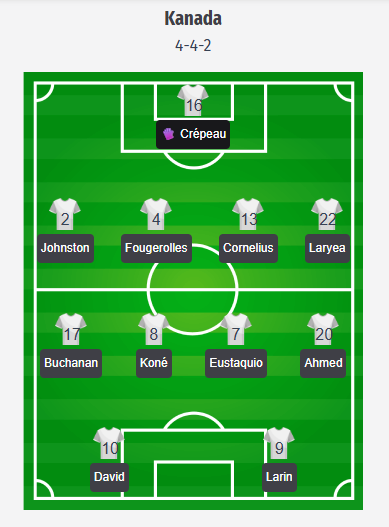
Canada could line up in Jesse Marsch’s expected 4-4-2 formation, with Maxime Crépeau in goal and a back line featuring Alistair Johnston, Luc De Fougerolles, Derek Cornelius, and Richie Laryea. In midfield, Ismaël Koné and Stephen Eustaquio look set to form the central duo, while Tajon Buchanan and Ali Ahmed provide width on the flanks. The biggest question mark remains Alphonso Davies, whose recovery from a thigh injury continues to be closely monitored after he missed the opener. In this projection, Luc De Fougerolles remains in his position, with Jonathan David and Cyle Larin slated to start up front. While this isn’t confirmed, this duo gives Canada a familiar focal point and a clear offensive axis.
Qatar Form & Record Check
Qatar’s 1-1 draw against Switzerland five days before kickoff has shifted the tone surrounding Julen Lopetegui’s team. They were under pressure for long stretches, but a late own goal rewarded their tenacity and gave Karim Boudiaf the opportunity to speak about morale and focus. Since Qatar’s 2022 World Cup campaign ended without a single point, an early point is more than just a cosmetic improvement. The overall record, however, raises uncomfortable questions about Qatar’s timing on the attack. Against El Salvador, they could only manage a 0–0 draw; against the Republic of Ireland, they lost 0–1; against Tunisia, they lost 0–3—before now securing the draw against Switzerland. Qatar has repeatedly kept the first halves close, but when Lopetegui uses Akram Afif, Edmílson Junior, and Almoez Ali as key players in the transition game, the threat isn’t just reactive.
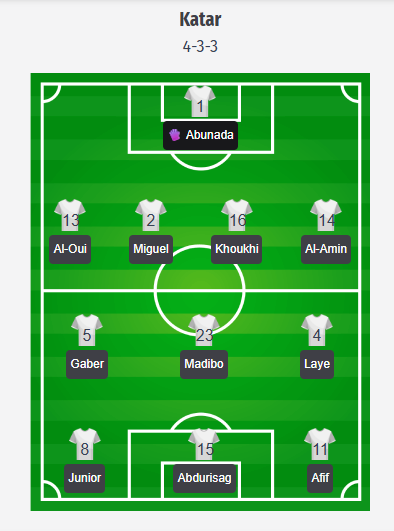
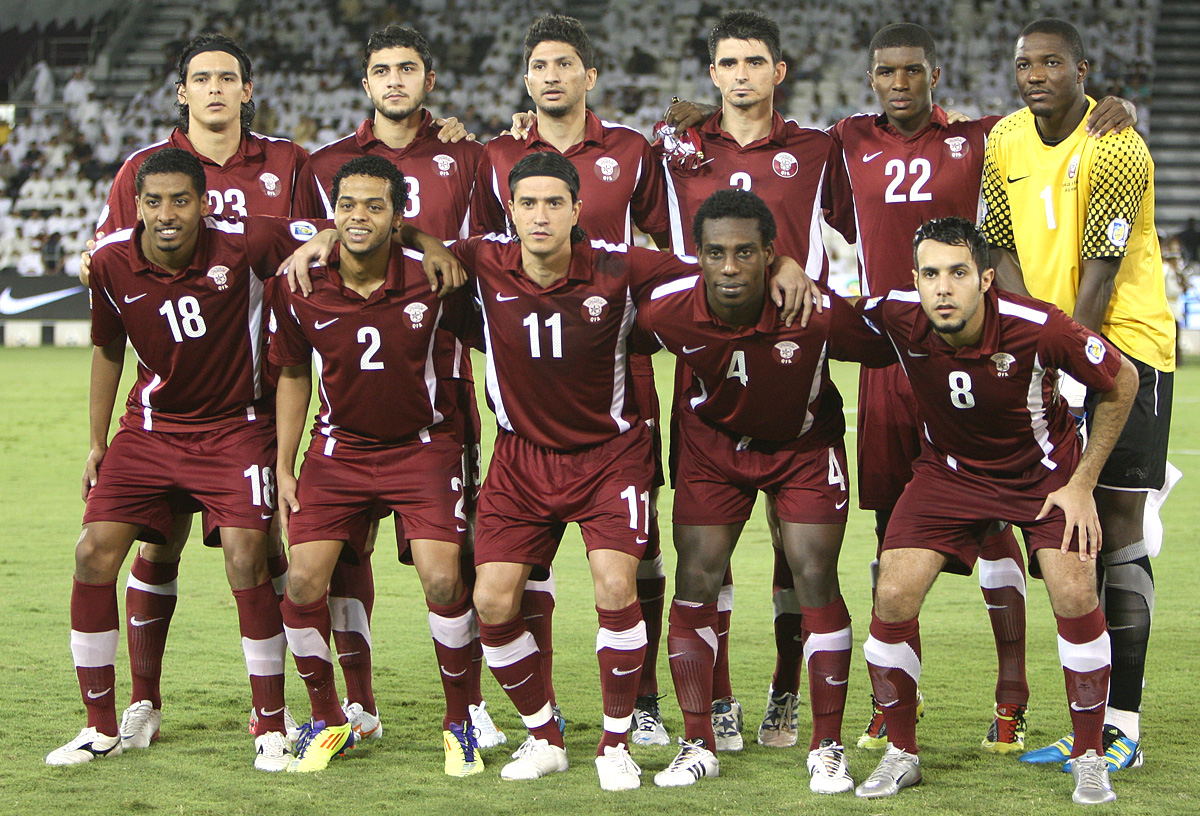
Qatar could stick with a 4-3-3, with Mahmoud Abunada, No. 1, expected to start in goal. The likely central defensive pairing will be Boualem Khoukhi, No. 16, and Pedro Miguel, No. 2, with Jassem Gaber, No. 5, and Assim Madibo, No. 23, in midfield. No injuries have been reported, so Akram Afif, No. 11, and Edmílson Junior, No. 8, remain the key options on offense.
Canada – Qatar Head-to-Head & Statistics
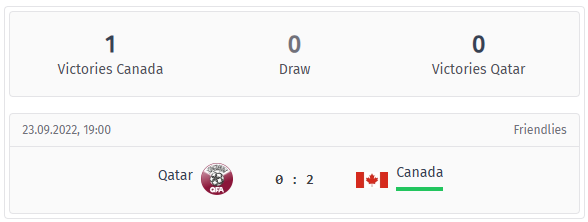
The available head-to-head record is straightforward but not particularly meaningful. In 2022, Canada won a friendly match 0–2 against Qatar; the decisive work was already done before halftime, and the second half remained under control. This serves only as a tactical reference point, as the current situation in Group B is different. Interestingly, it nevertheless supports the expectation that the early stages of the match are likely to be characterized by caution and control.